- 516-505-2300
- 718-368-2800
- Available 24/7

Sharifov & Associates, PLLC
Attorneys & Counselors At Law
Car Accident Lawyer
April 6, 2026Fake License Plates in New York: Criminal Charges, Penalties, and What to Do If You Were Arrested
May 4, 2026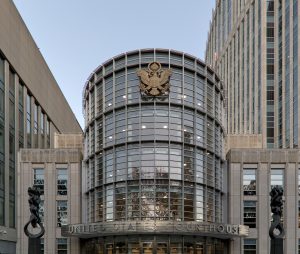 If you or someone you know is under investigation for healthcare fraud in New York, do not speak to investigators before consulting a criminal defense attorney. Every word you say can and will be used against you. Introduction: Why Healthcare Fraud Cases Are Unlike Any Other
Healthcare fraud is one of the federal government’s top prosecution priorities. The Department of Justice (DOJ), the Department of Health and Human Services Office of Inspector General (HHS-OIG), and the FBI dedicate entire task forces specifically to investigating and prosecuting healthcare fraud in New York and across the United States. What makes these cases especially dangerous is how they are built. Federal investigators often conduct covert surveillance, use cooperating witnesses, and analyze years of billing records before a single arrest is made. By the time federal agents knock on your door or you receive a grand jury subpoena, they have likely already assembled a substantial case. This article explains the most common types of healthcare fraud, how conspiracy charges work, what the government must prove, and how an experienced criminal defense attorney can fight these charges on your behalf.
What Is Healthcare Fraud Under Federal Law?
Federal healthcare fraud is prosecuted primarily under 18 U.S.C. § 1347, which makes it a crime to knowingly and willfully execute — or attempt to execute — a scheme to defraud any healthcare benefit program, or to obtain money or property from any healthcare benefit program by means of false or fraudulent pretenses.
Healthcare benefit programs include Medicare, Medicaid, TRICARE (military health coverage), CHIP (Children’s Health Insurance Program), private insurance, and any other federally funded health program. A conviction under 18 U.S.C. § 1347 carries up to 10 years in federal prison per count. If the fraud results in serious bodily injury, that increases to 20 years. If a patient dies as a result, the penalty can reach life imprisonment. A conspiracy to commit healthcare fraud under 18 U.S.C. § 1349 carries the same maximum penalties as the underlying fraud itself — up to 10 years, 20 years, or life, depending on the harm caused.
Common Types of Healthcare and Medical Fraud in New York. Healthcare fraud takes many forms. Federal prosecutors pursue all of them aggressively. Below are the most frequently charged types of medical fraud in New York federal courts.
1. Billing Fraud (False Claims)
Billing fraud — also called false claims — involves submitting claims to Medicare, Medicaid, or private insurers for services that were never rendered, were medically unnecessary, or do not match what was actually provided to the patient. This is the most common form of healthcare fraud and is prosecuted under both 18 U.S.C. § 1347 and the False Claims Act (31 U.S.C. § 3729). Examples include billing for 60-minute therapy sessions that lasted 15 minutes, billing for expensive brand-name medications while dispensing generics, and charging for surgeries or procedures that never took place.
2. Upcoding
Upcoding occurs when a provider submits a billing code that represents a more expensive service than the one actually provided. For example, a physician who performs a routine office visit but bills for a complex consultation is upcoding. Even small, repeated instances of upcoding across thousands of patients can amount to millions of dollars in fraudulent claims — and result in federal charges.
3. Unbundling
Unbundling involves separating services that should be billed together under a single billing code and submitting them as multiple separate claims in order to collect higher reimbursements. Insurance companies and government programs have rules that require certain services to be bundled. Deliberately separating them to inflate payment constitutes fraud.
4. Illegal Kickbacks. The Anti-Kickback Statute (42 U.S.C. § 1320a-7b) prohibits offering, paying, soliciting, or receiving anything of value in exchange for referrals of patients covered by federal healthcare programs. Kickbacks can take many forms: cash payments, free office space, shares in a business, excessive compensation, or lavish gifts to physicians who refer patients. Violation of the Anti-Kickback Statute is a felony carrying up to 10 years in prison per count, plus exclusion from all federal healthcare programs.
5. Phantom Patients and Ghost BillingPhantom billing involves submitting claims for patients who do not exist, patients who never received care, or deceased individuals whose insurance information was stolen. This is often part of organized fraud rings that operate across multiple clinics or pharmacies and frequently gives rise to conspiracy charges.
6. Identity Theft and Patient Brokering. Some healthcare fraud schemes involve stealing patient insurance information and using it to bill for services. Others involve paying patients — often called ‘patient brokers’ or ‘cappers’ — to recruit Medicare or Medicaid beneficiaries for unnecessary services so the provider can bill their insurance. Both schemes are federal crimes.
7. Pharmacy Fraud. Pharmacy fraud includes dispensing lower-cost drugs while billing for more expensive ones, billing for prescriptions never filled, dispensing controlled substances without a valid prescription, and operating pill mills that write prescriptions in exchange for cash. New York federal courts have seen significant pharmacy fraud prosecutions in recent years, with sentences ranging from years to over a decade in prison.
8. Durable Medical Equipment (DME) Fraud DME fraud involves billing Medicare or Medicaid for medical equipment — wheelchairs, back braces, orthopedic supports, CPAP machines — that patients did not need, did not request, or never received. Many DME fraud cases involve corrupt physicians who sign prescriptions without examining patients, or suppliers who fabricate medical necessity documentation.
9. Home Health Fraud. Home health fraud is rampant in New York and involves billing Medicare for home health services — nursing visits, physical therapy, aide services — that were not provided or were not medically necessary. The HHS-OIG has identified New York as one of the highest-risk areas in the country for home health fraud.
10. Mental Health and Substance Abuse Billing Fraud Mental health and substance abuse treatment centers have been increasingly targeted by federal prosecutors for billing fraud. Common schemes include billing for group therapy sessions that were actually unsupervised, inflating the number of sessions provided, billing for patients who relapsed and never attended treatment, and submitting claims for licensed therapist services when unlicensed staff provided care. Healthcare Fraud Conspiracy: Why the Conspiracy Charge Changes Everything
One of the most powerful tools prosecutors use in healthcare fraud cases is the conspiracy charge under 18 U.S.C. § 371 or the specific healthcare fraud conspiracy statute. A conspiracy charge means that two or more people agreed to commit fraud — and that one of them took some step toward carrying it out.
You do not have to have personally submitted a single fraudulent claim to be charged with healthcare fraud conspiracy. Agreeing to participate, taking any step in furtherance of the scheme, or simply knowing about it and continuing to benefit can be sufficient for prosecutors to charge you.
What Prosecutors Must Prove in a Conspiracy Case
To convict someone of healthcare fraud conspiracy, the government must prove beyond a reasonable doubt:
• That two or more people entered into an agreement to commit healthcare fraud
• That the defendant knowingly and voluntarily joined that agreement
• That at least one co-conspirator took an overt act in furtherance of the conspiracy
Critically, the government does not need to prove that you knew every detail of the scheme, that you participated from the beginning, or that you personally profited. A minor role — preparing documents, scheduling patients, operating billing software — can be enough. Joint and Several Liability in Conspiracy
Under conspiracy law, each member of a conspiracy is legally responsible for the acts of every other member carried out in furtherance of the scheme. This means that if your co-conspirators billed for $10 million in fraudulent claims, you may face liability for the entire $10 million even if you personally handled only a small fraction of the scheme. This principle has devastating consequences for defendants in healthcare fraud cases and is one of the primary reasons early, aggressive legal defense is absolutely critical.
Federal Penalties for Healthcare Fraud in New York
Healthcare fraud convictions carry some of the most severe penalties in the federal criminal code. Depending on the specific charges, a conviction can result in:
• Up to 10 years in federal prison per count of healthcare fraud (18 U.S.C. § 1347)
• Up to 5 years in federal prison per count of conspiracy (18 U.S.C. § 371)
• Up to 20 years if the fraud caused serious bodily injury to a patient
• Life imprisonment if the fraud resulted in a patient’s death
• Up to 10 years per count for Anti-Kickback Statute violations
• Criminal fines of up to $250,000 per count, or twice the gross gain or loss
• Mandatory restitution — repayment of all fraudulent amounts to Medicare, Medicaid, or insurers
• Civil monetary penalties of up to three times the amount of each fraudulent claim under the False Claims Act
• Permanent exclusion from Medicare, Medicaid, and all federal healthcare programs
• Loss of professional license (medical, pharmacy, nursing)
• Forfeiture of assets derived from the fraud
Federal prosecutors in the Eastern District of New York (Brooklyn) and the Southern District of New York (Manhattan) have obtained multi-year and even multi-decade sentences in healthcare fraud cases. These courts take these cases seriously, and so should you.
How Federal Healthcare Fraud Investigations Work
Understanding how the government investigates healthcare fraud is essential to building an effective defense. Federal investigations in New York typically unfold over months or even years before any arrest is made.
How Investigations Are Triggered
Federal healthcare fraud investigations in New York are most commonly initiated by:
• Data analytics and anomaly detection by Medicare and Medicaid billing auditors who flag unusual billing patterns
• Whistleblower complaints filed under the False Claims Act (qui tam lawsuits) by current or former employees
• Referrals from private insurance companies that detect fraud in claims
• Tips from patients, competitors, or disgruntled employees
• Information from cooperating witnesses in related investigations
What Federal Investigators Do
Once a healthcare fraud investigation is opened, federal agents typically:
• Subpoena years of billing records, patient files, and financial documents
• Conduct undercover operations, including posing as patients or referring physicians
• Interview employees, former employees, patients, and business associates
• Execute search warrants at medical offices, clinics, pharmacies, and billing companies
• Seize computers, medical records, and financial documents
• Freeze bank accounts and seek asset forfeiture
By the time you are contacted by federal agents, presented with a subpoena, or learn that your office has been searched, a substantial investigation is already underway. This is why you must retain an experienced federal criminal defense attorney immediately — before you say anything to investigators.
Defense Strategies in Healthcare Fraud Cases
Being charged with healthcare fraud does not mean a conviction is inevitable. An experienced criminal defense attorney — especially one who has worked as a prosecutor and understands how the government builds its cases — can challenge the charges at every stage.
Challenging Intent
Healthcare fraud requires proof that the defendant acted knowingly and willfully. Many billing errors, coding mistakes, and documentation deficiencies result from administrative errors, inadequate staff training, or complex and ambiguous billing regulations — not criminal intent. A skilled defense attorney can argue that errors were accidental and not criminal in nature.
Challenging the Scope of the Conspiracy
In conspiracy cases, the defense can argue that the defendant was not a knowing participant in the fraudulent scheme, did not agree to its criminal purpose, or withdrew from the conspiracy before overt acts were taken. Limiting the defendant’s alleged role and contesting joint liability for co-conspirators’ acts can significantly reduce exposure.
Attacking the Government’s Evidence
Federal prosecutions rely heavily on billing records, financial data, and witness testimony. Defense counsel can challenge the reliability of expert witnesses, the chain of custody of electronic records, the credibility of cooperating witnesses (who often have significant incentives to testify favorably for the government), and the accuracy of the government’s loss calculations.
Regulatory Defense
Healthcare billing is extraordinarily complex. Regulations under Medicare and Medicaid change frequently, vary by specialty, and are often ambiguous. A defense attorney with deep knowledge of federal healthcare regulations can argue that the defendant’s conduct was consistent with a good-faith interpretation of applicable billing rules.
Negotiating a Favorable Resolution
Not every healthcare fraud case goes to trial. In appropriate cases, experienced defense counsel can negotiate a plea agreement that reduces charges, limits prison exposure, preserves the defendant’s professional license, or avoids criminal conviction entirely through a deferred prosecution or civil settlement.
Why Choose Sharifov & Associates for Your Healthcare Fraud Defense
Rovshan Sharifov is a former New York prosecutor with over 23 years of experience in criminal law. He has spent his career in the New York criminal justice system — first as a prosecutor learning how the government builds and wins cases, and then as a criminal defense attorney using that knowledge to defend his clients.
When you are facing federal healthcare fraud charges in New York, you need an attorney who:
• Understands how federal investigators gather evidence and build conspiracy cases
• Knows the Eastern District and Southern District of New York federal courts
• Has the experience to challenge evidence, negotiate with prosecutors, and try cases to verdict
• Will fight aggressively for your freedom, your career, and your future
At Sharifov & Associates, PLLC, we defend physicians, nurses, clinic owners, pharmacists, billing companies, office managers, and healthcare executives throughout New York. We understand the stakes — and we fight for results.
Contact Sharifov & Associates Today — Confidential Consultation
If you are under investigation for healthcare fraud or have been charged with medical fraud conspiracy in New York, do not wait. The earlier you involve an experienced criminal defense attorney, the more options you have.
Call us now for a confidential consultation:
☎ 718-368-2800
☎ 516-505-2300
🌐 LawfirmSR.com
Sharifov & Associates, PLLC — Attorneys at Law
Aggressive Criminal Defense Across New York
Former New York Prosecutor | Rated by Super Lawyers | 23+ Years of Experience in Criminal Law