- 516-505-2300
- 718-368-2800
- Available 24/7

Sharifov & Associates, PLLC
Attorneys & Counselors At Law
Arrested for Assault in New York: What to Expect and How to Defend the Charge
May 22, 2026Desk Appearance Ticket (DAT) in New York: What You Need to Know
June 9, 2026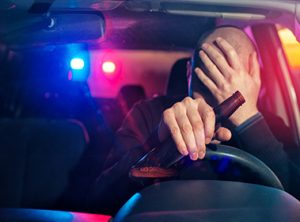
If you have been arrested for Driving While Intoxicated (DWI) in New York and you refused a chemical test, one of the first questions you are likely asking is whether refusing the test was the right decision — and what happens next. The short answer: refusing triggers a separate proceeding called a DMV refusal hearing, and the outcome of that hearing can cost you your driver’s license for at least one year, even if the criminal DWI charge is later reduced or dismissed.
This article explains how New York’s implied consent law works, what happens at a DMV refusal hearing, and why having an experienced DWI defense attorney at that hearing matters.
New York’s Implied Consent Law
Under New York Vehicle and Traffic Law (VTL) § 1194, every person who drives in New York is deemed to have given implied consent to a chemical test of breath, blood, urine, or saliva when a police officer has reasonable grounds to believe the driver was operating a vehicle in violation of VTL § 1192 (the DWI statute). The test must generally be administered within two hours of arrest.
You are not, however, physically forced to submit. The only situation in which a chemical test may be compelled against your will is when a third party has been seriously injured or killed in a crash involving the suspected drunk driver. In those cases, a chemical test may be administered pursuant to a court order based on the sworn affidavit of a police officer.
In every other case, you may refuse — but refusal triggers serious civil and administrative penalties.
Penalties for Refusing a Chemical Test in New York
If you refuse and the refusal is sustained at the DMV hearing, the consequences include:
- License revocation of at least one year for a first refusal (18 months for drivers with a prior DWI or refusal within the past five years)
- A $500 civil penalty for a first refusal ($750 for repeat offenders within five years)
- Immediate suspension of your license at arraignment, before any hearing has occurred
- No conditional or hardship license during the refusal-based suspension period in most circumstances
- Use of the refusal as evidence of “consciousness of guilt” against you in the criminal DWI case
For commercial drivers (CDL holders), the consequences are even more severe and can effectively end a driving career.
If you are confident you had not consumed enough alcohol to register a high Blood Alcohol Content (BAC), there is generally little benefit to refusing — the test simply will not produce a damaging reading. Refusal tends to hurt drivers whose BAC would have been close to or above the legal limit.
What Is a DMV Refusal Hearing?
The DMV refusal hearing is an administrative proceeding that is completely separate from your criminal DWI case in court. At your first appearance in criminal court (arraignment), you will be served with a Notice of Temporary Suspension and Notice of Hearing scheduling the DMV refusal hearing.
At the hearing, an Administrative Law Judge (ALJ) must decide four questions:
- Did the police officer have reasonable grounds to believe the driver was operating a motor vehicle in violation of VTL § 1192?
- Was the arrest lawful (i.e., supported by probable cause)?
- Was the driver given a clear and unequivocal refusal warning in language the driver could understand?
- Did the driver actually refuse the chemical test?
If the ALJ answers “yes” to all four questions, the license is revoked and the civil penalty is imposed. If the ALJ answers “no” to any one of them, the case must be dismissed and the driver’s license restored.
Virtual DMV Refusal Hearings via Webex
New York DMV refusal hearings are now conducted virtually using Cisco Webex. While these remote hearings were originally introduced during the COVID-19 pandemic, the DMV has continued the practice because it is faster, more efficient, and easier for all parties.
Clients, defense attorneys, and police officers connect by phone, computer, or mobile device. When connected by computer, the ALJ can share documents on screen — including the police officer’s Refusal Report (Form AA-134) and the Notice of Hearing — to enter them into evidence. Any additional evidence the defense intends to introduce must be submitted electronically by email, typically at least seven days before the hearing.
One important consequence of the move to virtual hearings: police officers now appear far more often than they did when hearings were in-person. You should not assume the case will be dismissed simply because the officer fails to show up. And even when an officer is absent, the ALJ may still proceed using the Refusal Report alone, which makes it essential to have a defense attorney who can attack any deficiencies in that report.
Why You Need an Experienced DWI Attorney at the Refusal Hearing
Many drivers underestimate the importance of the DMV refusal hearing because it is “just” an administrative proceeding. That is a costly mistake. The refusal hearing is often the first and best opportunity to challenge the police officer’s account of the arrest — and what happens there can directly affect your criminal case.
An experienced DWI defense attorney can:
- Cross-examine the arresting officer under oath, on the record, before the criminal case has progressed
- Challenge the legality of the traffic stop — did the officer have reasonable suspicion to stop the vehicle?
- Challenge probable cause for the DWI arrest — were field sobriety tests conducted properly?
- Challenge the refusal warnings — were they read in clear and unequivocal language? Was the warning given more than once if the driver hesitated?
- Challenge whether the alleged refusal was actually a refusal — confusion, medical issues, or unclear language can defeat this element
- Order the official hearing transcript — the officer’s sworn testimony can later be used in plea negotiations with the prosecutor, at a jury trial, or at suppression hearings in criminal court
That last point is one of the most underrated strategic advantages of a properly handled DMV refusal hearing. Locking an officer into sworn testimony early — before the criminal discovery process is complete — can produce inconsistencies that become powerful tools later in the criminal case.
Possible Outcomes of the Hearing
At the conclusion of the hearing, the ALJ will issue a decision. Possible outcomes include:
- Dismissal of the refusal charge and restoration of the driver’s license or driving privilege
- Revocation of the license for at least one year (18 months for repeat offenders), plus the applicable civil penalty
- Reserved decision, in which the ALJ takes the matter under consideration and issues a written ruling later, which is mailed to all parties
A revocation decision can be appealed to the DMV Administrative Appeals Board within 60 days, and your attorney can advise you on whether an appeal is warranted in your case.
Frequently Asked Questions
Can I get my license back during the DMV refusal hearing process?
After the initial suspension at arraignment, you may be eligible for a pre-hearing conference license until the DMV refusal hearing is held, depending on the circumstances. After a revocation, conditional licenses are generally not available for refusal-based revocations during the revocation period.
Is a refusal hearing the same as the criminal DWI case?
No. They are two separate proceedings. You can win one and lose the other. It is possible to beat the criminal DWI charge entirely and still lose your license at the DMV refusal hearing — and vice versa.
How long after my arrest is the DMV refusal hearing?
You are usually given a hearing date at arraignment. Hearings are typically scheduled within several weeks of the arrest, though scheduling can vary.
Can I represent myself at a refusal hearing?
Legally, yes. Practically, it is a serious mistake. The ALJ applies a formal legal standard, the officer will be there to testify, and the rules of evidence apply in a relaxed but real form. Self-represented drivers almost always lose.
Contact a New York DWI Defense Attorney Today
If you have been arrested for DWI in New York and refused a chemical test, time is critical. The DMV refusal hearing can begin the process of either saving — or losing — your driver’s license, and what happens there can shape your entire criminal case.
For a confidential consultation about your DMV refusal hearing or DWI charge, call our firm at 516-505-2300 or contact us online. Our experienced New York criminal defense attorneys handle DMV refusal hearings and DWI cases throughout Nassau County, Suffolk County, Queens, Brooklyn, and the surrounding New York metro area.
This article is for general informational purposes only and does not constitute legal advice. Every case is different, and you should consult a qualified New York DWI attorney about the specific facts of your situation.