- 516-505-2300
- 718-368-2800
- Available 24/7

Sharifov & Associates, PLLC
Attorneys & Counselors At Law
A Detective Called and Wants to Talk. What Should You Do?
May 4, 2026Facing a Felony Charge in New York: What You Need to Know
June 8, 2026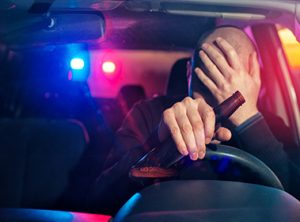
Why You Need a Specialized DWI Lawyer in New York —
Not a General Attorney
If you have been arrested for DWI in New York, the most important call you can make is to an experienced New York DWI lawyer who specializes in these cases — not a general practice attorney. DWI and DUI cases are among the most technically demanding in all of criminal law, and the decisions made in the first hours after an arrest can determine the outcome of the entire case. At Sharifov & Associates, our DWI lawyers in New York have defended hundreds of clients charged with DWI, DWAI, Aggravated DWI, and DWAI-Drugs across New York City, Brooklyn, and Nassau County for over two decades. A general attorney who primarily handles bankruptcy, immigration, or real estate matters may give well-intentioned but incorrect advice at a critical moment — and those early mistakes can have consequences that cannot be undone. Attorney Rovshan Sharifov and his team are available from the moment of arrest through every stage of the process — arraignment, DMV hearing, plea negotiations, and trial if necessary. Whether you were charged with DWI or what is commonly called DUI in other states, our New York DWI defense attorneys handle both.
How DWI Arrests Happen in New York
Most DWI arrests fall into one of four scenarios:
Traffic accident. A collision draws police to the scene. Signs of impairment observed at the scene trigger a full DWI investigation immediately.
Routine traffic stop. A driver pulled over for speeding or another infraction gives the officer an opportunity to observe signs of intoxication. Alcohol creates a false sense of confidence — impaired drivers often speed precisely because they feel sharp behind the wheel.
Parked car with engine running. New York law defines “operating” a vehicle as sitting behind the wheel with the key in the ignition and the engine running — even if the car is not moving. If you need to rest or warm up, move to the back seat. You may receive an idling fine in New York City, but you are far less likely to face a DWI arrest.
Plainclothes surveillance near bars and restaurants. Undercover officers sometimes monitor patrons leaving licensed establishments and follow vehicles driven by people they observed drinking.
BAC Levels and the Charges They Trigger Under New York Law
New York Vehicle and Traffic Law (VTL) Article 1192 creates a graduated set of charges based on blood alcohol content (BAC):
0.05% or below — No DWI or DWAI charge is possible without other evidence of impairment.
Above 0.05% and up to 0.07% — DWAI (Driving While Ability Impaired), VTL §1192.1. A traffic infraction, not a crime. First offense: $300–$500 fine, up to 15 days in jail, 90-day license suspension.
0.08% or above — DWI (Driving While Intoxicated), VTL §1192.2. A misdemeanor. First offense: $500–$1,000 fine, up to 1 year in jail, minimum 6-month license revocation, mandatory Ignition Interlock Device for at least 1 year.
0.18% or above — Aggravated DWI, VTL §1192.2-a. First offense: $1,000–$2,500 fine, up to 1 year in jail, minimum 1-year license revocation, mandatory IID.
For reference: one standard drink — a 1.5 oz. shot, a 5 oz. glass of wine, or a 12 oz. beer — raises BAC by approximately 0.02%–0.03% for an average-built man, and BAC falls by roughly 0.02% per hour. Weight, food intake, and individual metabolism all affect these figures significantly.
Should You Refuse the Chemical Test?
Under New York’s implied consent law, driving in New York constitutes consent to a chemical test when lawfully requested by a police officer following a DWI arrest. Refusing carries immediate and serious consequences:
- Your license is suspended at arraignment by the presiding judge
- A DMV refusal hearing is scheduled within 15 days — missing it results in automatic revocation
- First-offense refusal: $500 civil penalty ($550 for commercial drivers), 1-year license revocation
- Second refusal within 5 years: $750 civil penalty, 18-month license revocation
- The refusal itself can be introduced as evidence against you in the criminal case
If your BAC is below the legal limit, refusing the test gains you nothing — the test would not show an illegal level, and the refusal creates an additional and serious layer of consequences. Call our DWI attorneys before making this decision. The right answer depends entirely on your specific facts and circumstances.
The DMV Refusal Hearing — Critical for Your License and Your Criminal Case
If you refused the chemical test, a DMV hearing before an Administrative Law Judge (ALJ) is automatically scheduled. The ALJ determines four things: whether the officer had reasonable grounds to believe you were intoxicated, whether the arrest was lawful, whether the refusal warning was delivered in clear and unequivocal language, and whether you actually refused.
If the officer failed on any of these points, the ALJ may dismiss the refusal finding and restore your license — before the criminal case is even resolved.
Beyond the license question, this hearing is a critical strategic opportunity. When our DWI lawyers in New York cross-examine the arresting officer under oath, that testimony is transcribed. The transcript becomes a tool — used in plea negotiations with the prosecutor and, if necessary, at trial to challenge the officer’s credibility. A strong DMV hearing performance by the defense often leads to a significantly better outcome in the criminal case. You must have a DWI specialist representing you at this hearing, not a general attorney unfamiliar with DWI procedure.
What Happens After a DWI Arrest in New York
Police bring the defendant to a specialized DWI processing precinct equipped with an evidentiary breathalyzer. Surveillance cameras are present in these facilities, and that footage is routinely introduced by prosecutors at trial.
Within approximately 24 hours, the defendant appears before a judge for arraignment. The judge formally charges the defendant, addresses bail, orders alcohol screening, and in most cases suspends the driver’s license on the spot. Having a private DWI lawyer in New York at arraignment is essential — public defenders carry caseloads that make it nearly impossible to give a technically complex DWI case the close attention it requires from the very beginning.
New York DWI Penalties by Offense Level
| Offense | Classification | Fine | Max Jail | License Action |
|---|---|---|---|---|
| DWAI — 1st offense | Traffic infraction | $300–$500 | 15 days | Suspended 90 days |
| DWI — 1st offense | Misdemeanor | $500–$1,000 | 1 year | Revoked 6+ months + IID |
| Aggravated DWI — 1st offense | Misdemeanor | $1,000–$2,500 | 1 year | Revoked 1+ year + IID |
| Leandra’s Law — 1st offense (child 15 or under) | Class E Felony | $1,000–$2,500 | 4 years | Revoked 1+ year + IID |
| DWI — 2nd offense within 10 years | Class E Felony | $1,000–$5,000 | 4 years | Revoked 1+ year + IID |
| DWI — 3rd offense within 10 years | Class D Felony | $2,000–$10,000 | 7 years | Revoked 1+ year + IID |
In addition to the fines above, a mandatory surcharge and fees are added to every conviction: $395 for misdemeanors and $520 for felonies (plus $5 in town or village courts). These are separate from the fine and cannot be waived.
If a prior offense within 10 years involved Aggravated DWI, the minimum revocation for any subsequent DWI, DWAI-Drugs, or DWAI-Combination conviction increases to 18 months minimum, not 1 year.
Three or more alcohol or drug-related convictions or refusals within 10 years can result in permanent license revocation. A waiver request may be submitted after a minimum of 5 years.
A DWI conviction in New York cannot be expunged. It stays on your record permanently and is treated as a predicate conviction if you are arrested again within 10 years — turning what would be a misdemeanor into a felony.
Felony DWI — The Second Arrest Is Where Lives Change
Many clients come to our New York DWI lawyers after a second DWI arrest, having handled the first case without specialized counsel. What was a misdemeanor the first time becomes a Class E felony the second time — with the possibility of state prison. Three or more alcohol or drug-related convictions or refusals within 10 years can result in permanent license revocation.
Had they avoided a criminal conviction on the first arrest — through a non-criminal DWAI disposition, for example — the second arrest would still be a misdemeanor. This is why the outcome of a first DWI case is so consequential, and why having an experienced DWI defense attorney in New York from the very beginning matters enormously.
Collateral Consequences Beyond the Criminal Case
A DWI arrest in New York sets more in motion than just the criminal charge:
Professional licenses. CDL holders, TLC-licensed drivers, and Home Health Aides (HHAs) face immediate license suspension upon arrest — before any conviction — putting employment at risk from day one.
Vehicle forfeiture. Police may initiate civil forfeiture of the vehicle used during the arrest, typically resolved by payment of a civil fine and completion of drug and alcohol screening.
Auto insurance. Rates typically rise sharply for several years following a DWI arrest or conviction. Some carriers cancel coverage entirely.
Immigration. A DWI conviction can create serious complications for non-citizens, including grounds for removal proceedings and bars to naturalization. If you are not a U.S. citizen, contact our immigration attorneys in addition to your DWI lawyer immediately.
DMV points. As of November 2024, a conviction for DWI, DWAI, or Aggravated DWI under VTL §1192 now carries 11 DMV points — the same as speeding more than 40 mph over the limit. Eleven points within 18 months trigger a DMV suspension proceeding, on top of all other criminal and license revocation consequences.
Driver Responsibility Assessment (DRA). A DWI conviction or chemical test refusal triggers a $250 per year DRA fee for 3 years ($750 total), paid directly to the DMV — entirely separate from all court fines, surcharges, and mandatory fees.
Plea Bargain or Trial
To negotiate a non-criminal resolution, the defense must give the prosecutor a reason to offer one — typically by identifying a weakness in the case: an unlawful traffic stop, a defective breathalyzer, improper field sobriety test administration, or a constitutional violation during the arrest. Our DWI defense attorneys in New York build that argument through thorough review of all discovery materials, breathalyzer calibration records, and body camera footage.
When a satisfactory offer is not available, we take DWI cases to jury trial. The prosecution must prove guilt beyond a reasonable doubt — a high bar in a technically complex case where the evidence has been rigorously challenged. We prepare every case as if it will go to trial, and prosecutors know it.
Do not plead guilty to a DWI criminal charge without fully understanding that the conviction is permanent, follows you for life, and elevates any future arrest within 10 years to felony territory.
If There Was an Accident: Talking to Insurance Adjusters
If your DWI arrest followed a car accident, insurance representatives will contact you quickly. Statements made to an adjuster can be used against you in the criminal case. False statements can lead to a separate charge for insurance fraud. In many cases, our DWI attorneys speak directly with insurance representatives on behalf of clients to protect their rights in both proceedings simultaneously. If you were injured, you may also have a personal injury claim — contact our office to discuss both matters together.
Contact Our DWI Lawyers in New York
DWI cases in New York move quickly. If you have been arrested for DWI in New York City, Brooklyn, or Nassau County, call our DWI lawyers now. The decisions made in the hours immediately after an arrest directly affect the outcome. Call us for confidential consultation.
718-368-2800 | 516-505-2300