
Charge Reduction2026
Criminal Sale of a Controlled Substance
Felony Reduced; Probation Violation Dismissed
A Class B felony criminal sale charge was reduced to a misdemeanor and the probation violation was dismissed.
Nassau County Supreme Court
Has the prosecutor made you an offer? Deciding whether to accept a plea is one of the most important choices in a criminal case. It can affect your freedom, your record, your job, and your immigration status for years. Most criminal cases in New York end without a trial, so how your plea is negotiated often matters as much as how your case would be tried.
Before you decide, you need to know what the offer really means, what could happen at trial, and whether a better result is possible.
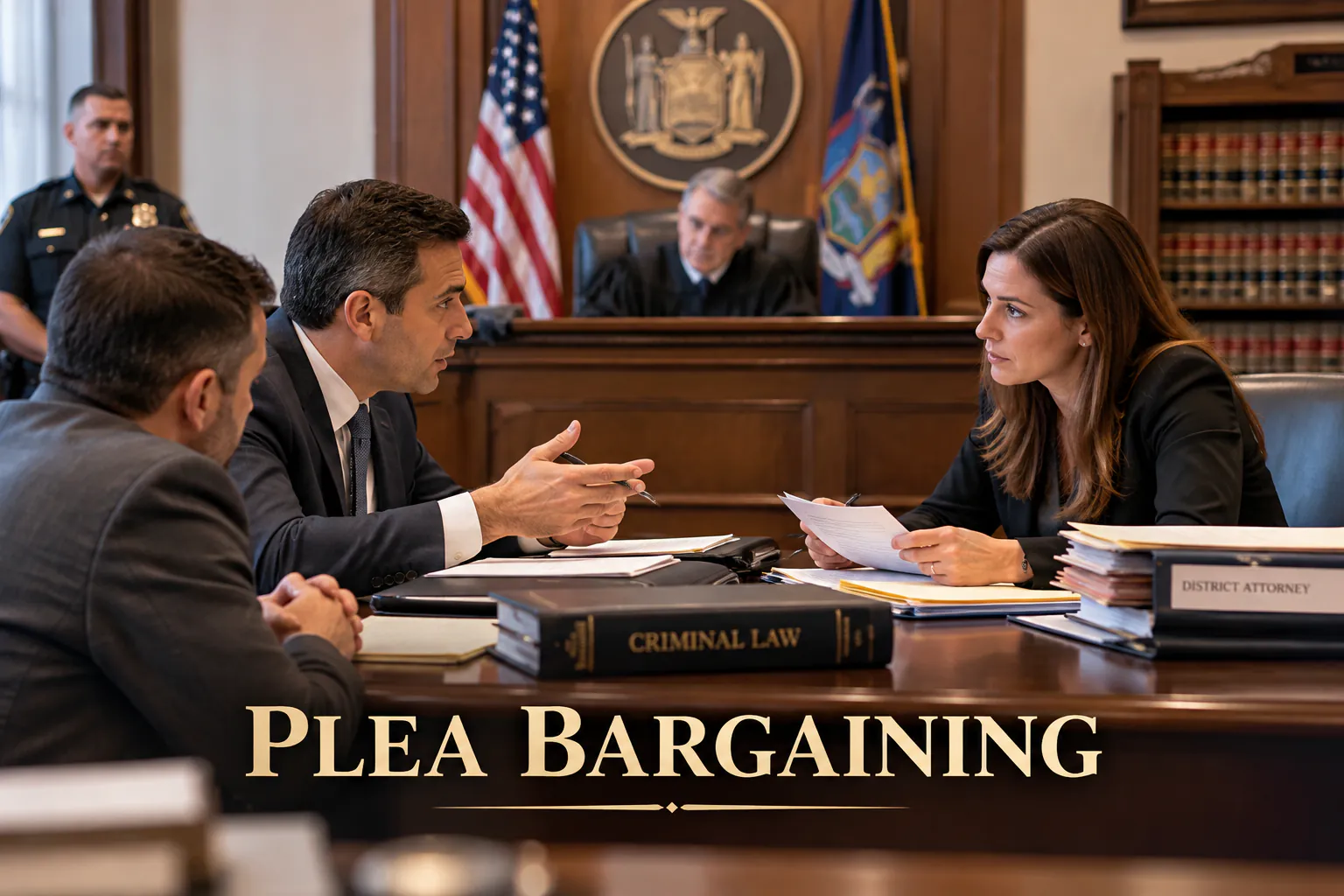
A plea deal, also called a plea bargain, resolves a case without a trial. Usually, the defendant pleads guilty to a less serious charge, or in exchange for a specific sentence. A negotiated resolution may include:
Some outcomes require no guilty plea at all, such as an Adjournment in Contemplation of Dismissal (ACD).
Every offer must be shared with you. Your lawyer must promptly tell you about each offer and explain it.
The decision is yours. Your lawyer advises, but only you decide whether to accept a plea or go to trial.
Consequences reach beyond the courtroom. A plea can affect immigration, licenses, employment, and housing, so every offer must be reviewed for more than the sentence. immigration consequences of criminal charges
You can't judge the risk of trial without the offer in hand. The right choice comes from comparing the two.
Lower-level cases sometimes resolve on the first court date. Don't accept without understanding the consequences.
In felony cases, prosecutors may offer a reduced plea before going to a Grand Jury. This window can close quickly.
Weak evidence or a successful hearing can lead to a better offer.
Offers are often withdrawn or become less favorable.
The prosecutor isn't the only source of an offer. In New York, a judge may indicate the sentence they would impose if you plead guilty. Sometimes that is better than the District Attorney's offer. A plea to a reduced charge generally requires the prosecutor's consent, but an experienced defense lawyer knows when to seek a commitment from the court.
| Outcome | Guilty plea? | Criminal record? | Sealing | Immigration risk |
|---|---|---|---|---|
| Dismissal | No | No | Sealed automatically | Generally none |
| ACD | No | No | Dismissed and sealed if not restored, usually after 6 months | Generally not a conviction |
| Violation (e.g., disorderly conduct) | Yes | No (not a crime) | Generally sealed | Can still count as a conviction |
| Misdemeanor | Yes | Yes | Clean Slate eligible after 3 years* | Depends on the offense |
| Felony | Yes | Yes | Clean Slate eligible after 8 years if not excluded* | Often serious |
Scroll the table to view all columns →
Clean Slate implementation is due by November 2027. This table is general information; results depend on the charge, your history, and your status.
If you can't answer every question, you are not ready to decide.
Need help answering these questions? Call NYC: 718-368-2800 | Call Long Island: 516-505-2300
Rovshan Sharifov and Michael Mullen are both former Nassau County Assistant District Attorneys. They know how prosecutors evaluate cases and decide what to offer. Mr. Mullen has tried more than 70 cases to verdict. Senior Associate Victor Shulov brings more than 16 years of criminal defense experience. He negotiates with prosecutors almost every day in courts across New York City, Nassau County, and Suffolk County, so he knows how offers are made in each courthouse and how to push for better terms.
Together, our attorneys combine a prosecutor's perspective, daily negotiating experience, and extensive trial experience. Prosecutors make better offers when they know the defense is ready to win at trial.
Criminal Sale of a Controlled Substance
A Class B felony criminal sale charge was reduced to a misdemeanor and the probation violation was dismissed.
Leaving the Scene; Resisting Arrest
Charged with leaving the scene of an accident causing injury and resisting arrest, the client pleaded to a misdemeanor structured with immigration consequences in mind, with a time-served sentence.
View more case results. Prior results do not guarantee a similar outcome.
Offers often improve as the defense develops the case.
It is not a crime, but it can still matter for immigration and some licenses.
An independent review may find issues worth raising.
Fines, probation, protection orders, and collateral consequences can last long after the case closes.
Practical answers
Call before your next court date. Once a plea is entered, it is very difficult to undo. If you already have a lawyer, we can provide an independent second opinion.
First contact
For a recent arrest, an upcoming court date, or contact from law enforcement, call either office or send a text.
Call us
Text us718-344-6287WhatsAppTelegramMessages are reviewed as soon as possible. Do not send confidential details. Standard message rates may apply.
 WhatsApp
 Telegram