
Urgent

Available 24/7 for urgent criminal defense matters.

Back to criminal-defense focus

New York court-system guide

New York State and Federal Criminal Courts

Where will your case be heard?

The charging statute, alleged conduct, venue rules, and procedural stage may determine whether a case proceeds in a New York court or a federal district court. The court system can also change the rules governing release, discovery, motion practice, and sentencing.

General information

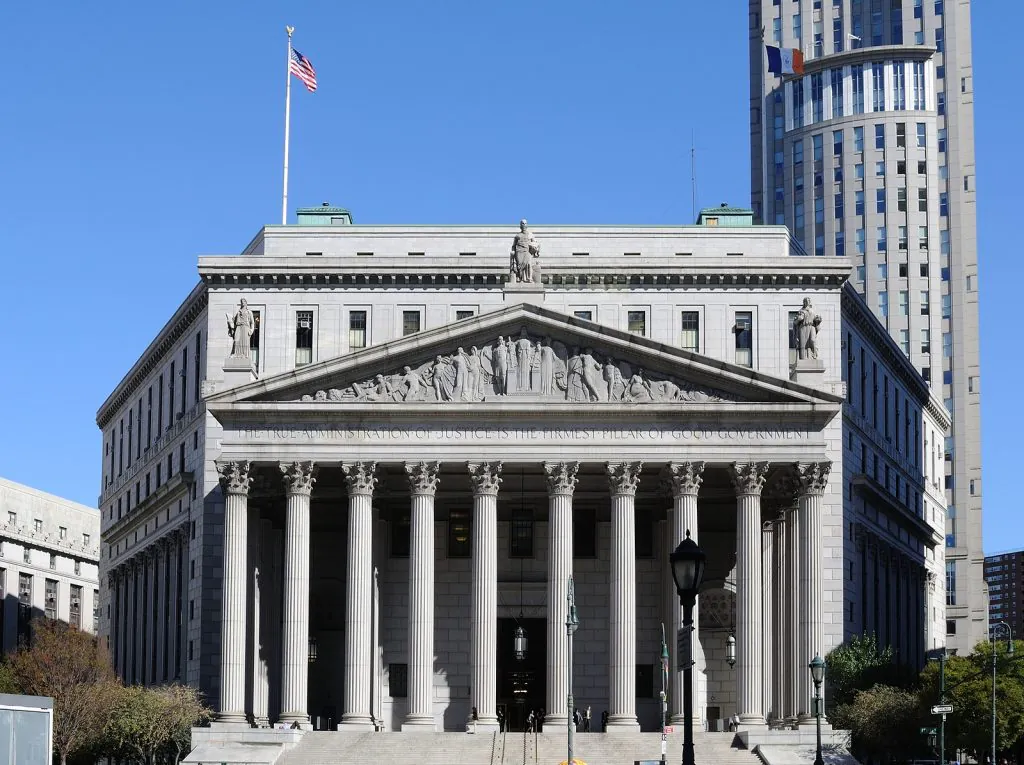
Historic New York courthouse with classical columns under a blue sky
New York’s court names can be counterintuitive: Supreme Court is a trial court, while the Court of Appeals is the State’s highest court.

The threshold question

Jurisdiction comes before strategy.

Federal district courts have original jurisdiction, exclusive of state courts, over offenses against United States law under 18 U.S.C. § 3231. Federal crimes appear in Title 18 and in other parts of the United States Code.

State prosecutors commonly bring charges under New York law. The governing statute and facts—not whether an allegation sounds “serious” or “interstate”—control whether a federal offense, a state offense, or both may be alleged.

Federal court structure in New York

EDNY and SDNY serve different parts of the region.

The federal judiciary has 94 district courts. New York’s federal appeals go to the U.S. Court of Appeals for the Second Circuit. Review by the U.S. Supreme Court is generally discretionary. Review the federal court structure.

EDNY

U.S. District Court for the Eastern District of New York

Territorial coverage

Kings County (Brooklyn), Queens County (Queens), Richmond County (Staten Island), Nassau County, and Suffolk County. The statute also provides concurrent jurisdiction over specified waters within Bronx and New York Counties.

Court locations

The court currently identifies courthouses in Brooklyn and Central Islip.

SDNY

U.S. District Court for the Southern District of New York

Territorial coverage

Bronx County (the Bronx), New York County (Manhattan), Dutchess, Orange, Putnam, Rockland, Sullivan, and Westchester Counties.

Court locations

The court states that it hears cases in Manhattan, White Plains, and Poughkeepsie.

District boundaries do not by themselves decide venue or the particular courthouse for every case. Federal criminal cases in EDNY and SDNY are typically prosecuted by the respective U.S. Attorney’s Office, sometimes with investigative agencies and other Department of Justice components.

New York criminal courts in NYC and Long Island

The court’s name reflects its role—not necessarily its rank.

New York Supreme Court is a trial court. The New York Court of Appeals is the State’s highest court. The path between courts depends on the charge, county, and procedural posture.

New York City Criminal Court

Misdemeanors, lesser offenses, and preliminary felony proceedings

NYC Criminal Court handles misdemeanors and lesser offenses and conducts felony arraignments and preliminary hearings.

Supreme Court, Criminal Term

Felony prosecutions in New York City

Felony prosecutions that proceed in Supreme Court are heard in its Criminal Term. A felony may proceed by indictment or, when authorized and statutory conditions are met, by waiver of indictment and a superior-court information.

Nassau and western Suffolk District Courts

Misdemeanors, lesser offenses, and felony arraignments

District Courts handle misdemeanors and lesser offenses and arraign felony defendants in Nassau County and the five western towns of Suffolk County.

County, Town, and Village Courts

Felony trials outside NYC and local preliminary proceedings

County Courts in Nassau and Suffolk conduct felony trials. Nassau's Village Justice Courts and eastern Suffolk's Town and Village Justice Courts hear local misdemeanor and violation matters and may handle preliminary felony proceedings.

Family Court and criminal court

Concurrent jurisdiction is limited by statute

Family Court and criminal courts have concurrent jurisdiction only over specified family offenses involving qualifying relationships. A civil family-offense case and a State criminal prosecution can exist at the same time.

Youth Part

Juvenile and adolescent offender proceedings

Each county has a Youth Part for juvenile and adolescent offender proceedings. Whether a 16- or 17-year-old’s felony case remains there or is removed to Family Court depends on the charge and statutory removal process.

Which law applies?

State and federal charges can arise from different statutes—or the same alleged conduct.

A defendant does not elect the prosecuting sovereign. Charging and venue remain subject to the governing statutes and case-specific facts.

Examples commonly charged under New York law

State-law allegations may include assault, robbery, burglary, theft, impaired driving, domestic-violence-related offenses, and many drug offenses. The specific statute and proof determine the charge. Review the firm’s organized criminal-charge directory.

Examples of federal criminal statutes

Federal examples may include federally insured bank robbery; mail, wire, bank, health-care, securities, or tax fraud; federal firearms and immigration offenses; child-exploitation offenses; and federal controlled-substance offenses. Border crossing or “large-scale” conduct is not a universal element of every federal drug charge. For a closer look at financial prosecutions, review the firm’s federal white-collar defense guide .

Dual sovereignty

Can both systems bring charges based on the same conduct?

When conduct allegedly violates both New York and federal law, each government may prosecute offenses under its own law. That possibility does not predict that two cases will be filed. New York’s prior-prosecution rules in CPL §§ 40.20 and 40.30 and the Department of Justice’s internal Petite Policy require a fact- and charge-specific analysis.

General procedural comparison

The systems use different rules, timelines, and sentencing frameworks.

These are general frameworks. A particular case may involve different motions, exclusions, release conditions, discovery orders, charging instruments, or statutory requirements.

Charging and first court appearance

New York state

A New York felony may proceed in superior court by indictment or, when CPL § 195.10 permits, by waiver of indictment and a superior-court information.

CPL § 195.10

Federal

A federal felony generally proceeds by indictment unless indictment is validly waived. An arrested defendant must generally be brought before a magistrate judge without unnecessary delay.

Rule 5 (HTML) · GovInfoRule 7 (HTML) · GovInfo

Federal Rules 5 and 7 (PDF)

Release, bail, and detention

New York state

New York securing-order rules distinguish qualifying and non-qualifying offenses and govern release, non-monetary conditions, bail, and remand.

New York CPL § 530.20

Federal

The Bail Reform Act directs courts to consider recognizance first and then the least restrictive adequate conditions. Detention requires the statutory hearing and finding; listed presumptions are rebuttable.

18 U.S.C. § 3142

Grand-jury testimony

New York state

A defendant’s opportunity to testify depends on timely written notice, the statutory notice process, waiver of immunity, and examination by the prosecution.

New York CPL § 190.50

Federal

A target has no legal right to testify. Department of Justice policy nevertheless addresses reasonable requests by targets or subjects under stated conditions.

Justice Manual § 9-11.152

Time limits

New York state

CPL § 30.30 is generally a prosecution-readiness framework, not a simple trial-start deadline. The period varies by charge level and is subject to statutory exclusions.

New York CPL § 30.30

Federal

The Speedy Trial Act generally uses a 30-day charging framework and a 70-day trial framework measured from statutory triggering events, with identified exclusions.

18 U.S.C. § 3161

Discovery

New York state

Article 245 generally requires initial discovery within 20 calendar days after arraignment for an in-custody defendant and 35 days for an out-of-custody defendant, subject to statutory exceptions and protective procedures.

New York CPL § 245.10

Federal

Federal Rule 16 requires specified disclosures on request. For qualifying government-witness statements, 18 U.S.C. § 3500 generally limits compelled production until after direct examination.

Rule 16 (HTML) · GovInfo

Federal Rule 16 (PDF)

Sentencing and supervision

New York state

New York sentencing depends on the offense classification, statutory sentencing provisions, prior record, disposition, and other case-specific rules.

Federal

Federal courts consider the advisory Sentencing Guidelines and 18 U.S.C. § 3553(a) factors. Mandatory minimums and supervised release apply only when authorized or required by law.

18 U.S.C. § 3553(a)

Collateral consequences

New York state

Immigration, licensing, employment, and later-sentencing effects depend on the offense, disposition, status, professional regime, and individual record.

Federal

The same caution applies in federal cases. The state or federal label alone does not determine every collateral consequence.

Immigration consequences can be case-specific. In Padilla v. Kentucky, the Supreme Court held that counsel must advise a noncitizen client whether a plea carries a risk of deportation.

Criminal and immigration guide

New York criminal appeals

Appellate Term, Appellate Division, and Court of Appeals serve different roles.

Most Court of Appeals criminal review requires permission after intermediate appellate review, subject to narrow statutory exceptions. New York appellate courts.

Local criminal courts

Appellate Term

Appeals from NYC Criminal Court and Nassau and Suffolk District Courts go to the applicable Appellate Term.

Superior trial courts

Appellate Division

Appeals from Supreme Court and County Court judgments go to the Appellate Division for the judicial department where the judgment was entered.

State’s highest court

New York Court of Appeals

The Court of Appeals is not the trial-level Supreme Court. Most criminal cases reach it only by permission after intermediate review, subject to narrow statutory exceptions.

Frequently asked questions

Start with the document, statute, and court named in the case.

Review the New York criminal case timeline

Court-specific preparation

The court system changes the rules. The charge and record shape the defense.