
Urgent

Available 24/7 for urgent criminal defense matters.

Personal Injury

Premises Liability

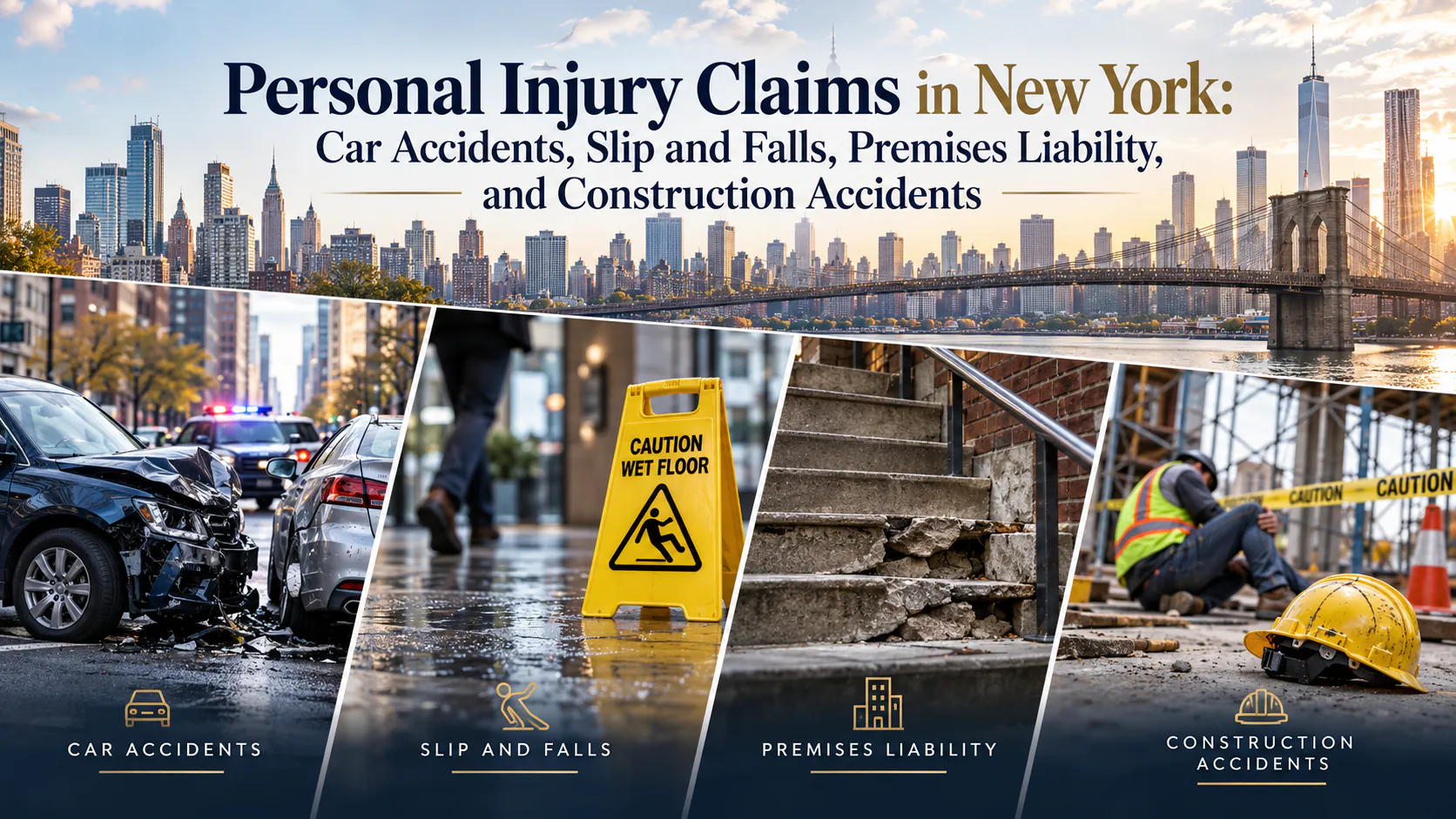
Property owners and the people who manage property, such as landlords, stores, restaurants, and building managers, have a legal duty to keep their property reasonably safe. When they fail to do so and someone gets hurt, the law may hold them responsible. Premises liability covers far more than slip and fall accidents: it includes injuries from falling objects, broken stairs, defective elevators, inadequate security, and many other dangerous conditions.

Key points:

  • Owners must keep their property in reasonably safe condition for people who are expected to be there.
  • In most cases, you must show the owner created the danger or knew or should have known about it.
  • Landlords can be responsible for poor security when a crime on the property was foreseeable.
  • Claims involving public property usually require a notice of claim within 90 days.

Types of Premises Liability

  • Slip, trip, and fall accidents (Learn more: Slip and Fall)
  • Stairway accidents, from broken steps, missing handrails, or poor lighting
  • Negligent security, such as assaults in buildings with broken locks, broken entry doors, or no lighting
  • Falling objects, such as merchandise, ceiling materials, or building facade pieces
  • Elevator and escalator accidents
  • Building defects, such as collapsing ceilings, broken windows, and structural failures
  • Swimming pool accidents
  • Fires
  • Injuries from missing smoke or carbon monoxide detectors
  • Dog attacks on property

Who Can Be Responsible?

Depending on the situation, responsible parties may include:

  • property owners;
  • landlords and building managers;
  • commercial tenants, such as stores and restaurants, that control the space;
  • maintenance, security, and elevator companies hired to maintain the property; and
  • government agencies, for public property, NYCHA buildings, and public transit.
  • Finding every responsible party is important, because each may have separate insurance coverage.

What You Must Prove

In most premises liability cases, you generally must show:

  • A dangerous condition existed on the property.
  • The owner or manager created the condition, or knew or should have known about it and had time to fix it.
  • The condition caused your injury.
  • Landlord responsibilities in New York City. Owners of multiple dwellings (buildings with three or more apartments) have a legal duty to keep the building in good repair, including common areas such as hallways, stairs, lobbies, and entrances.

Negligent Security

A property owner isn't responsible for every crime that happens on its property. But an owner or landlord can be responsible when:

  • a criminal act on the property was reasonably foreseeable, for example because of prior similar incidents; and
  • the owner failed to take reasonable security measures, such as working locks, secure entry doors, adequate lighting, or security staff; and
  • that failure allowed the attacker to get in or the crime to happen.
  • These cases often depend on the building's history, police records, and prior complaints, which an attorney can investigate.

What If I Was Partly at Fault?

New York uses pure comparative negligence for premises liability cases. If you were partly responsible, your recovery is reduced by your share of fault, but you can still recover.

Claims Against Public Property

If your injury happened on property owned by New York City, NYCHA, the MTA, or another public agency, you generally must file a notice of claim within 90 days and a lawsuit within one year and 90 days. Missing the deadline can end your case.

After a Property Injury

  • Get medical care right away.
  • Report the incident to the owner, landlord, or manager.
  • Ask for a copy of any report.
  • Take photos and video of the condition that caused your injury.
  • Get names and contact information of witnesses.
  • Save evidence, such as clothing, shoes, and any damaged items.
  • Keep records of prior complaints you or others made about the condition.
  • Contact an attorney before speaking with an insurance company.

Important Deadlines

What You Can Recover

  • medical expenses, including future care
  • lost wages and lost earning capacity
  • pain and suffering
  • loss of enjoyment of life

Practical answers

Frequently Asked Questions

From the legal library

Related articles

Browse Personal Injury articles

Confidential consultation

Injured on Someone Else's Property? Contact Us Now.

Contact Sharifov & Associates, PLLC for a confidential consultation about your injury.