When both spouses agree to end the marriage and can resolve the key issues together, an uncontested divorce is usually faster, less expensive, and far less stressful than a contested case. But even an agreed divorce requires precise paperwork and a well-drafted settlement agreement. Mistakes can lead to rejected filings, delays, or problems that surface years later.
At Sharifov & Associates, PLLC, we guide couples through uncontested divorces and legal separations in New York City and on Long Island.
Key points:
A divorce is uncontested only when the spouses agree on the divorce and on every related issue.
Most New York divorces use the no-fault ground of irretrievable breakdown for at least six months.
In most uncontested divorces, neither spouse has to appear in court.
A legal separation can be converted into a divorce after six months under the current version of DRL § 170 (opens in a new tab).
What Makes a Divorce Uncontested?
A divorce is uncontested when both spouses agree to the divorce and to every related issue:
division of marital property and debts, including homes, bank accounts, retirement accounts, and businesses;
spousal maintenance;
child custody, parenting time, and child support, if there are children; and
attorney's fees and any other financial issues.
If any issue is in dispute, the case is contested until it is resolved.
New York Divorce Residency Requirements
At least one spouse must meet New York's residency rules (DRL § 230). Generally:
either spouse has lived in New York continuously for two years before filing; or
either spouse has lived in New York for one year, and the couple married in New York, lived here as a married couple, or the grounds for divorce arose here; or
the grounds arose in New York and both spouses live here when the case is filed.
No-Fault Divorce in New York
Most New York divorces use the no-fault ground: the relationship has broken down irretrievably for at least six months (DRL § 170 (opens in a new tab)). One spouse states this under oath, and no one has to prove fault. A no-fault divorce cannot be granted until all financial and child-related issues are resolved.
The Uncontested Divorce Process Step by Step
Settlement agreement. The spouses sign a written agreement resolving every issue, signed and acknowledged before a notary.
Filing. The case is started in the Supreme Court in the county where either spouse lives.
Service and required notices. The other spouse is served with the papers and required notices, including:
Defendant's affidavit. The other spouse usually signs an affidavit agreeing to the divorce.
Final paperwork. The court requires findings of fact, a proposed judgment, child support worksheets if there are children, and, when the marriage was performed in a religious ceremony, an affidavit confirming the removal of barriers to remarriage.
Judgment of divorce. Once the judge signs the judgment and it is entered, the divorce is final. The judgment can also restore a spouse's former name.
In most uncontested divorces, neither spouse needs to appear in court. Processing times vary by county, and many cases are completed within a few months after the final papers are submitted. (Learn more: NY Courts: CourtHelp (opens in a new tab))
Property, Support, and Children
Equitable distribution: marital property is divided fairly, which isn't always equally. Separate property, such as property owned before the marriage, inheritances, and gifts from third parties, generally stays with the spouse who owns it.
Retirement accounts often require a separate court order to divide.
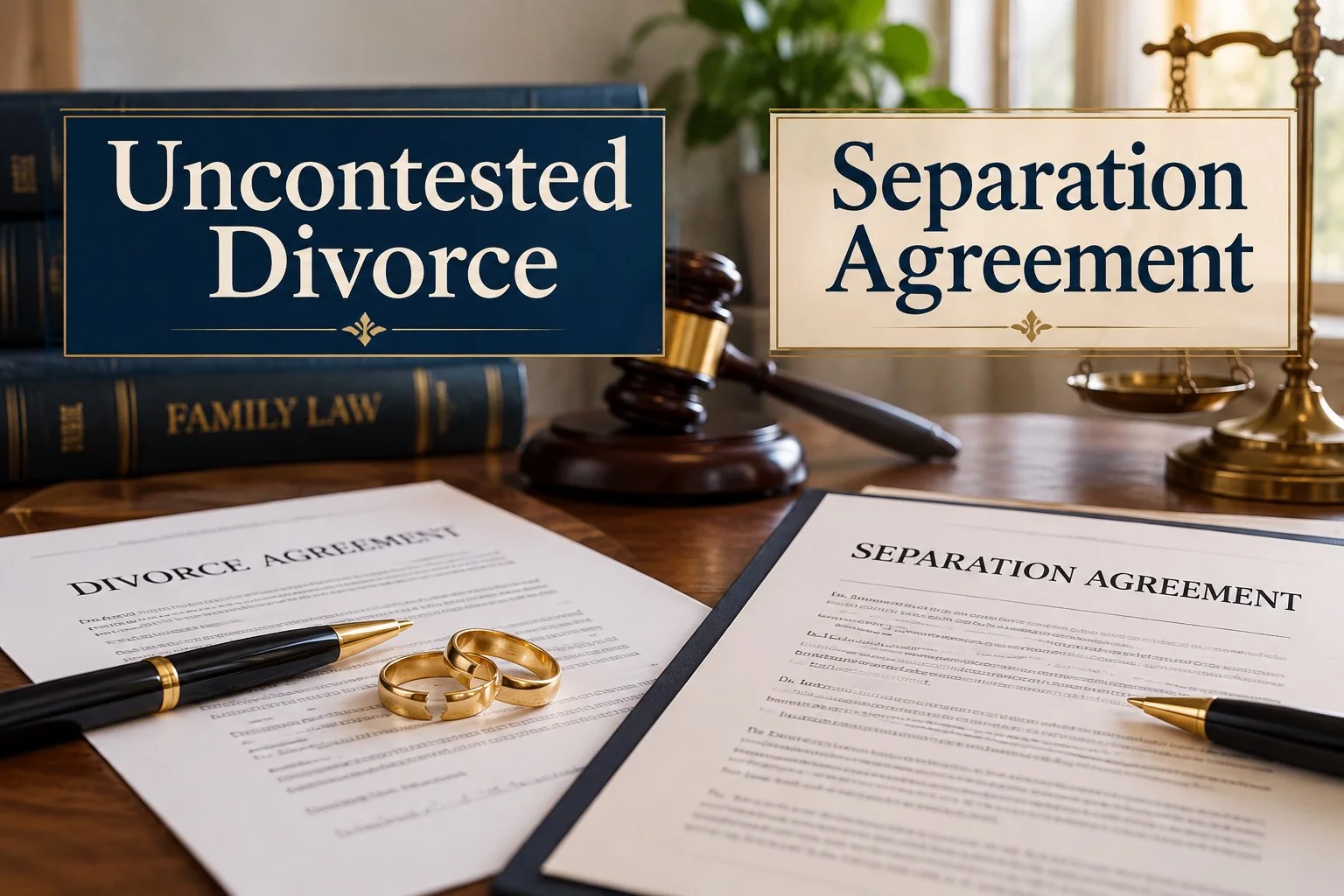
Some couples aren't ready to divorce, or prefer to remain married for religious, financial, or health insurance reasons. New York offers two forms of legal separation:
Separation agreement: a written contract signed by both spouses and acknowledged in the same manner as a deed. It can cover property, support, custody, and other issues, and it should be filed with the county clerk.
Judgment of separation: a court order obtained through a court case.
After living apart for six months under a separation agreement or judgment and complying with its terms, either spouse can seek a divorce under the current version of DRL § 170 (opens in a new tab).
Why Work With an Attorney Even When You Agree
identify issues you might miss, such as retirement accounts, business interests, taxes, and health insurance;
draft an agreement that is clear, enforceable, and compliant with New York law;
file correct paperwork, avoiding rejections and delays; and
protect long-term interests, especially when children, significant assets, or immigration status are involved.
Immigration Considerations
When one spouse's immigration status is connected to the marriage, such as a conditional green card (opens in a new tab), a divorce can affect their case. Our combined family and immigration practice allows us to plan for both.
Why Choose Sharifov & Associates, PLLC
Efficient handling of uncontested divorces and separation agreements
Carefully drafted agreements that anticipate future issues
Family and immigration experience under one roof
Offices in NYC and Long Island
Practical answers
Frequently Asked Questions
How long does an uncontested divorce take in New York?
It depends on the county, but many are finalized within a few months after the final papers are submitted.
Do we have to go to court for an uncontested divorce?
In most uncontested divorces, no. The judge decides the case based on the papers.
What if we agree on the divorce but not on everything else?
The divorce can't be granted until all issues are resolved, either by agreement or by the court.
What's the difference between separation and divorce?
A separated couple remains legally married, with their rights defined by an agreement or judgment. A divorce ends the marriage.
Can a separation become a divorce?
Yes. After living apart for six months under a separation agreement or judgment and complying with its terms, either spouse can seek a divorce under the current version of DRL § 170 (opens in a new tab).
What is the difference between a contested and an uncontested divorce, including legal fees?
The difference is whether the spouses agree. In an uncontested divorce, both spouses agree to end the marriage and agree on every issue: property and debts, spousal support, and, if there are children, custody, parenting time, and child support. In a contested divorce, the spouses disagree on at least one issue, and the court must decide it.How long it takes. An uncontested divorce is usually completed with paperwork, without court appearances or a trial. It often takes a few months, depending on how quickly the court processes the papers. A contested divorce can take a year or more and may involve court conferences, financial disclosure, depositions, expert evaluations, and possibly a trial.Legal fees. An uncontested divorce is usually far less expensive. Many firms handle uncontested divorces for a flat fee, because the work is predictable: preparing the agreement and the court papers. A contested divorce is usually billed by the hour against a retainer, and total costs can be many times higher, especially if there are disputes over custody, a business, or significant assets. Both types of divorce also involve court filing fees, about $335 for a standard uncontested case in New York.Stress and privacy. An uncontested divorce is generally faster, less stressful, and more private, because the spouses keep control of the terms instead of leaving them to a judge.Can a contested divorce become uncontested? Yes. Many divorces start with disagreements and become uncontested once the spouses reach a settlement through negotiation or mediation.Our firm focuses on uncontested divorces and separation agreements in New York City and on Long Island. Learn more about our uncontested divorce services.
For spouses who agree on property, support, custody, and other terms, this guide explains the New York uncontested-divorce process, essential paperwork, and issues that must be resolved.
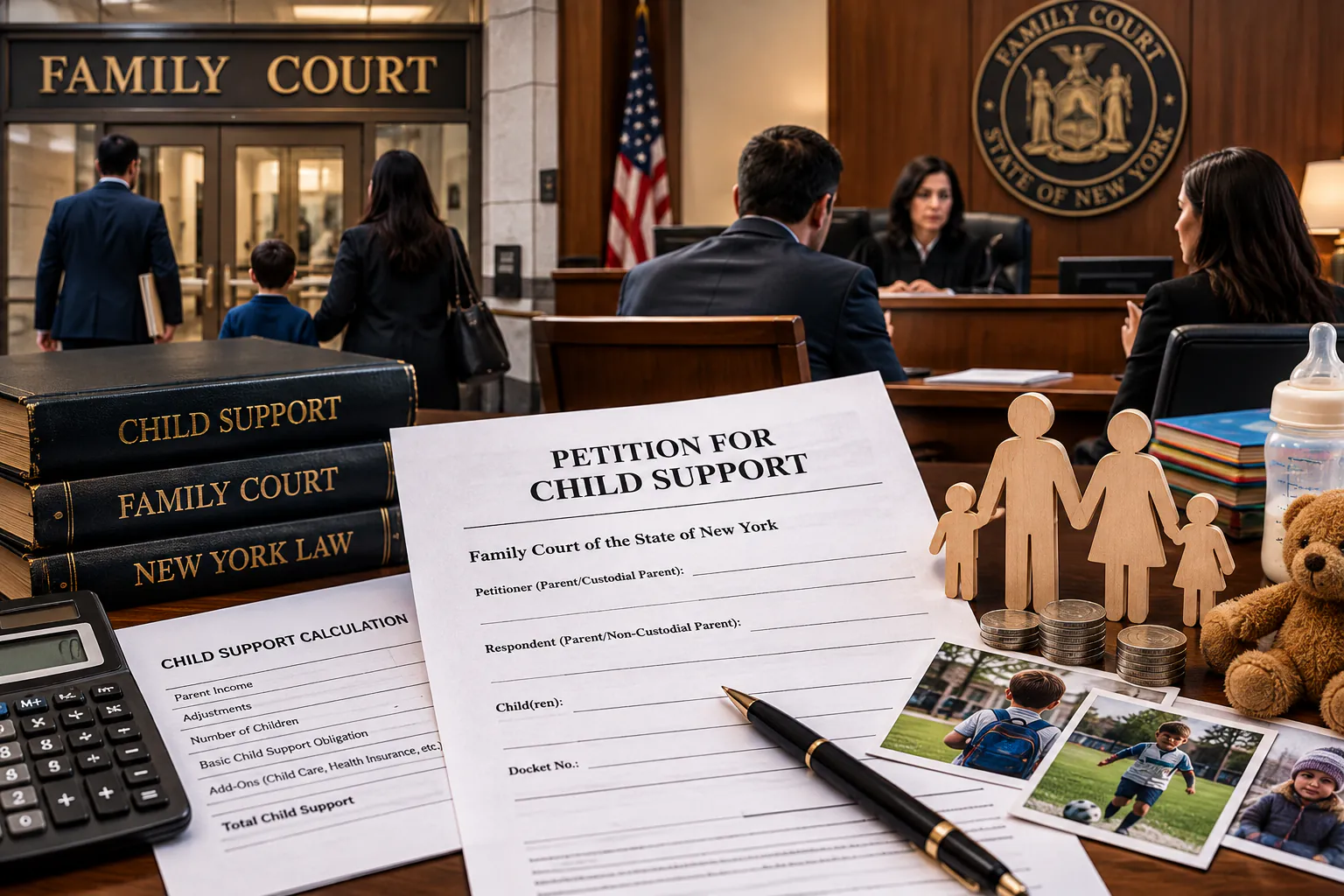
A practical overview for parents starting, responding to, enforcing, or seeking to modify child support in New York Family Court, including filing, financial disclosure, hearings, and additional expenses.
Learn when a New York prenuptial agreement may help protect assets, children from a prior marriage, support expectations, and inheritance rights—and what makes an agreement enforceable.
Considering a prenuptial agreement
Confidential consultation
Planning a Divorce or Separation? Contact Us Now.
Contact Sharifov & Associates, PLLC for a confidential consultation about an uncontested divorce or legal separation.

 Family Law
 WhatsApp
 Telegram