
This article provides general information only. It should not be construed as legal advice or as specific guidance for your situation.
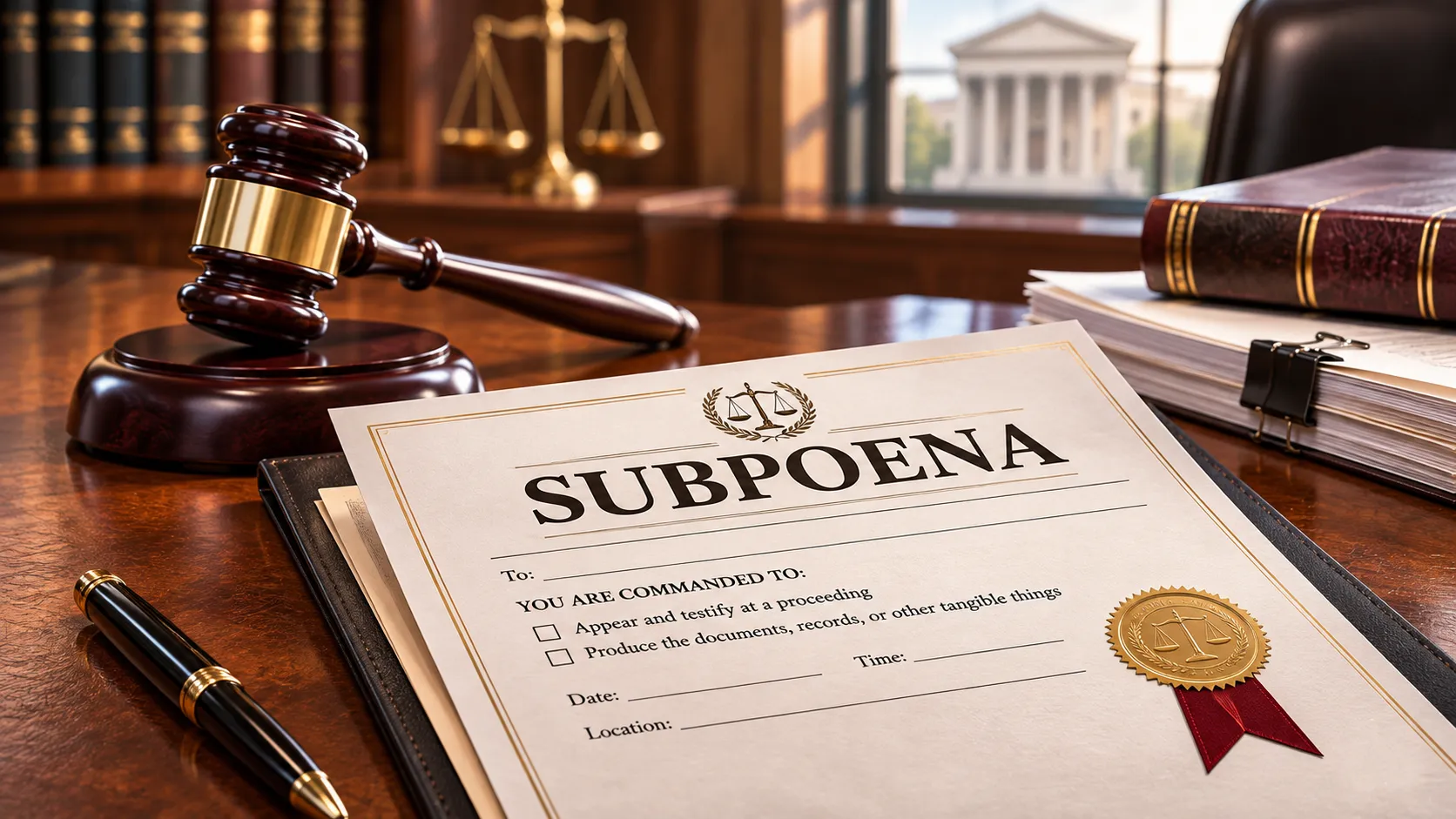
A subpoena is a court order that requires a person to come to court or another proceeding to testify, or to turn over documents or other items. Receiving a subpoena does not mean that you are accused of a crime. Witnesses, businesses, and record keepers receive subpoenas every day. But a subpoena is not optional, and in some cases it is the first sign that an investigation may involve you. This guide explains the different types of subpoenas in New York and federal cases, what happens if you ignore one, and when to speak with a lawyer.
What Is a Subpoena?
The word “subpoena” comes from Latin and means “under penalty.” A subpoena is a written order, issued in connection with a court case or an investigation, that commands the person named in it to appear at a set time and place, or to produce specific records or items. In New York criminal cases, subpoenas are governed by Article 610 of the Criminal Procedure Law. Depending on the case, a subpoena may be issued by the court, by the District Attorney, or by a defendant’s attorney.
The Different Types of Subpoenas
Subpoenas are usually described by what they require and by the proceeding they come from:
- Subpoena to testify (subpoena ad testificandum): requires a person to appear and give testimony at a trial, a hearing, a deposition, or before a grand jury.
- Subpoena for records (subpoena duces tecum): requires a person or a business to produce documents, records, or other items, such as bank statements, phone records, business files, or video recordings.
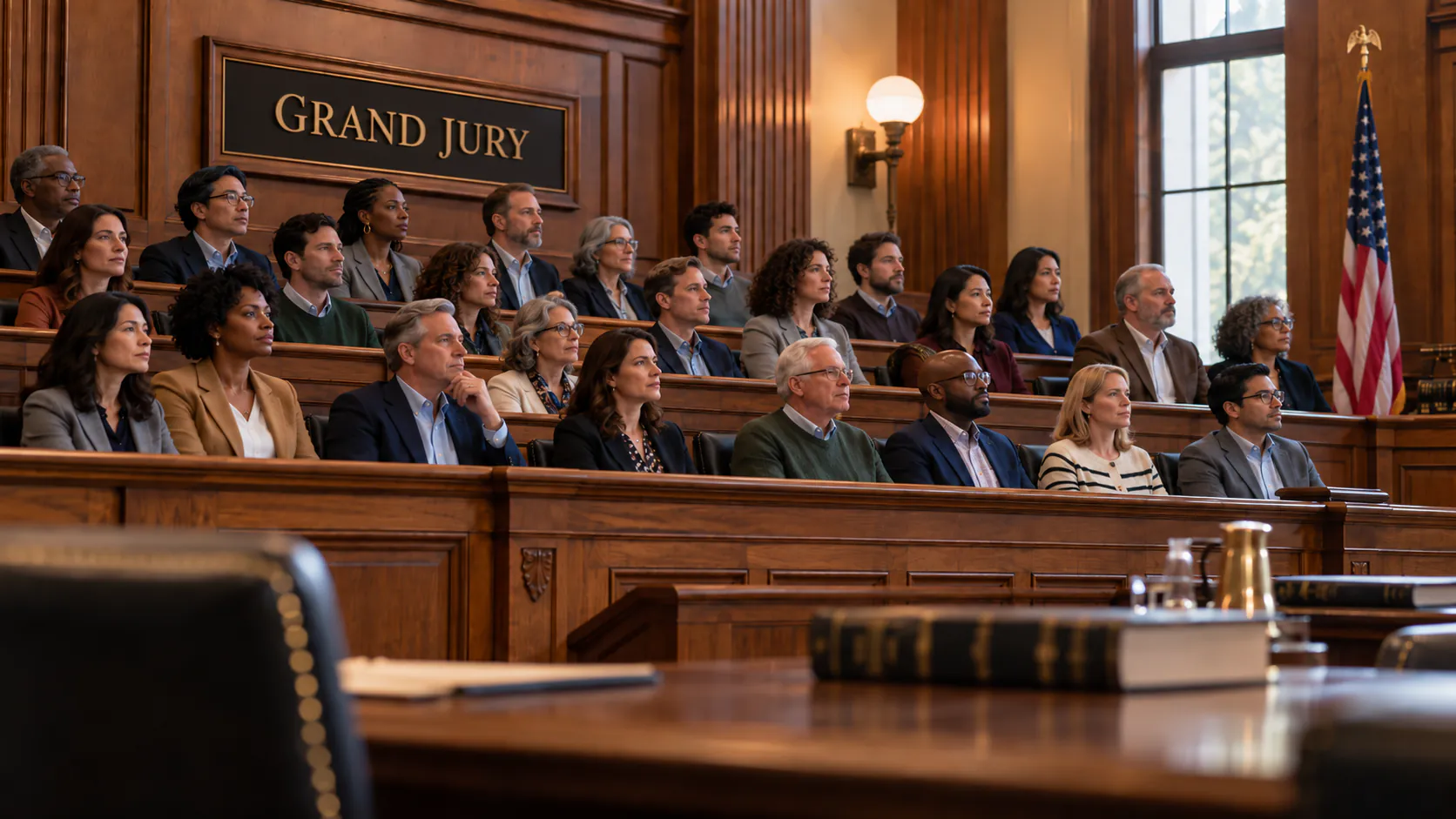
- New York grand jury subpoena: issued by the District Attorney’s office to bring a witness or records before a New York grand jury, which decides whether there is enough evidence to charge someone with a felony.
- Federal grand jury subpoena: issued in a federal investigation, usually by an Assistant United States Attorney, to require testimony or documents before a federal grand jury. Federal investigations often involve white-collar, health care fraud, and other complex charges.
- Trial and hearing subpoenas: require a witness to appear at a criminal trial or hearing. Both the prosecution and the defense can subpoena witnesses.
- Subpoenas in civil and Family Court cases: lawsuits, divorces, and Family Court cases also use subpoenas to obtain testimony and records. A subpoena in a civil case can still matter in a criminal case if the testimony or records concern possible criminal conduct.
Grand Jury Subpoenas: Witness, Subject, or Target?
A grand jury subpoena deserves special attention. The person who receives it may be only a witness, or the investigation may be focused on that person. In federal investigations, prosecutors often describe a person as a witness, a subject, or a target of the investigation, and that status can change as the investigation develops. A lawyer can contact the prosecutor to learn more about your role before you testify or produce anything.
New York has its own rules. A witness who testifies before a New York grand jury generally receives immunity from prosecution for the matters testified about, unless the witness signs a waiver of immunity. A person who is asked to sign a waiver of immunity, or who is told that they may be a target, should not sign or testify without first speaking with a lawyer. Witnesses before a federal grand jury do not receive automatic immunity.
What to Do If You Receive a Subpoena
- Do not ignore it. Note the date, time, and place on the subpoena, and who issued it.
- Do not destroy, change, or hide any documents or items that the subpoena asks for. Doing so can lead to separate criminal charges, such as tampering with physical evidence.
- Do not discuss your testimony with other people involved in the case.
- Speak with a lawyer before you testify or turn over anything, especially if the subpoena comes from a grand jury or a federal investigation. A lawyer can find out why you were subpoenaed, arrange a different date if needed, review what must be produced, and protect your rights.
What Happens If You Ignore a Subpoena?
A subpoena is a court mandate. A person who does not obey it without a lawful excuse can be held in contempt of court, and the court can issue a warrant to bring the witness to court. In New York, intentionally disobeying the lawful process of a court can also be charged as criminal contempt in the second degree, a misdemeanor.
Can a Subpoena Be Challenged?
Yes. A subpoena can sometimes be challenged with a motion to quash or modify it, for example when it asks for privileged material, is unreasonably broad, or was not properly issued. A witness may also have the right not to answer certain questions, such as under the Fifth Amendment privilege against self-incrimination, or because of a legal privilege like the attorney-client privilege. Whether these rights apply depends on the facts, so they should be raised through a lawyer.
Practical answers
Frequently Asked Questions
Does a subpoena mean I am being charged with a crime?
Do I need a lawyer if I am only a witness?
What if I cannot appear on the date on the subpoena?
What is the difference between a subpoena and a warrant?
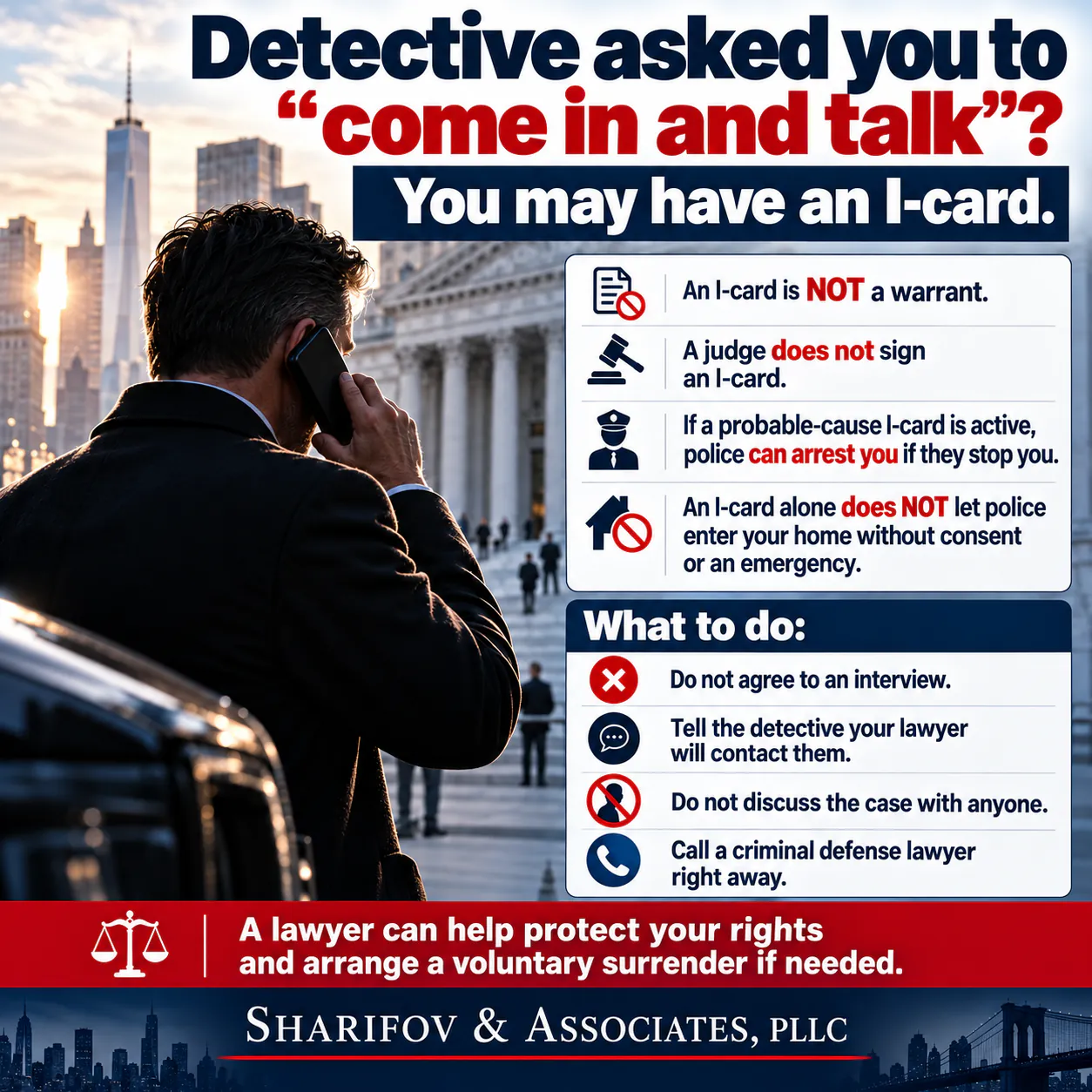
A detective called me and asked me to come in. Is that a subpoena?
Speak With a Lawyer About a Subpoena
If you received a subpoena in a criminal case, a grand jury investigation, or a federal investigation in New York City or on Long Island, contact Sharifov & Associates, PLLC before the date on the subpoena. We meet clients at our Brooklyn office, at our Hempstead office, and by video.
 WhatsApp
 Telegram